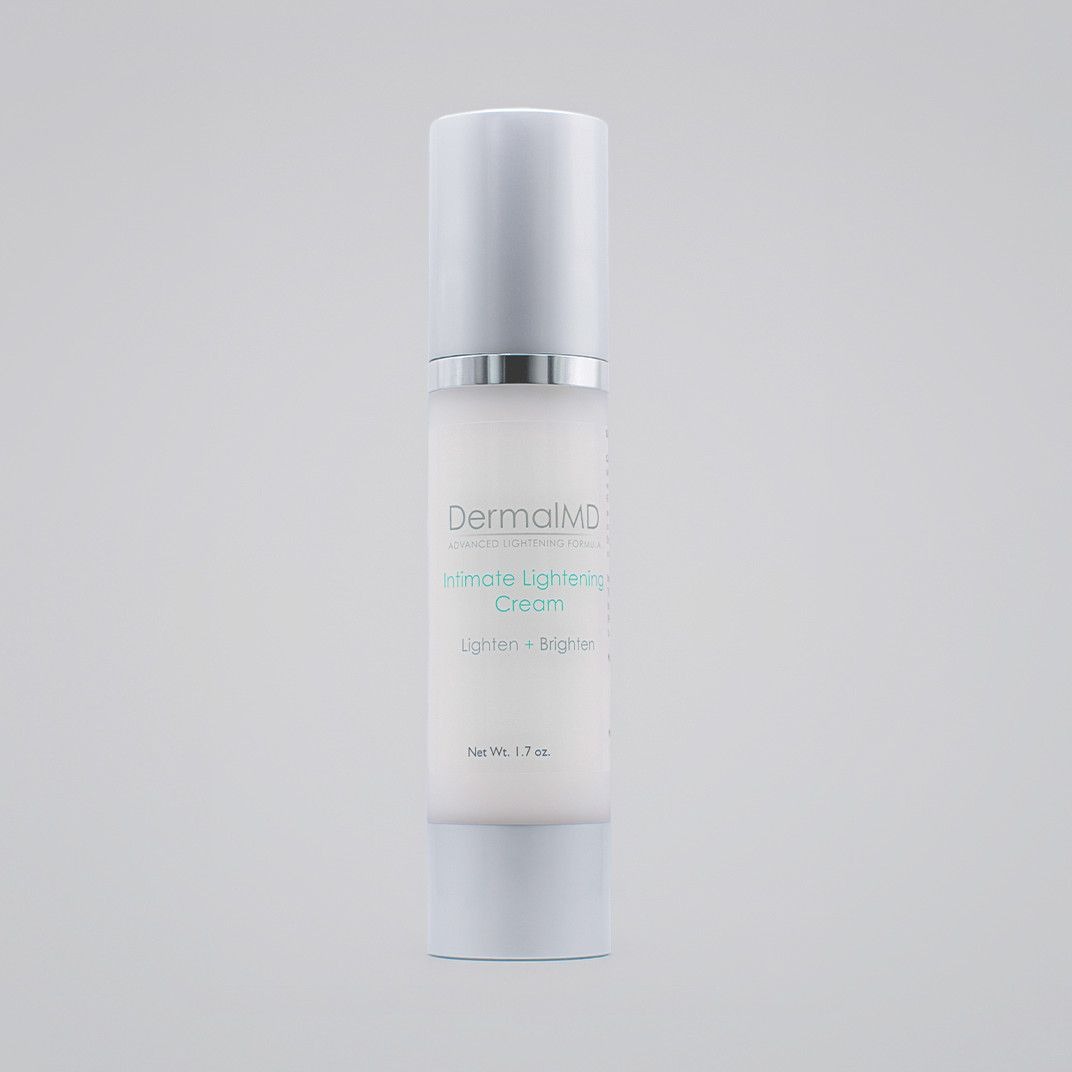
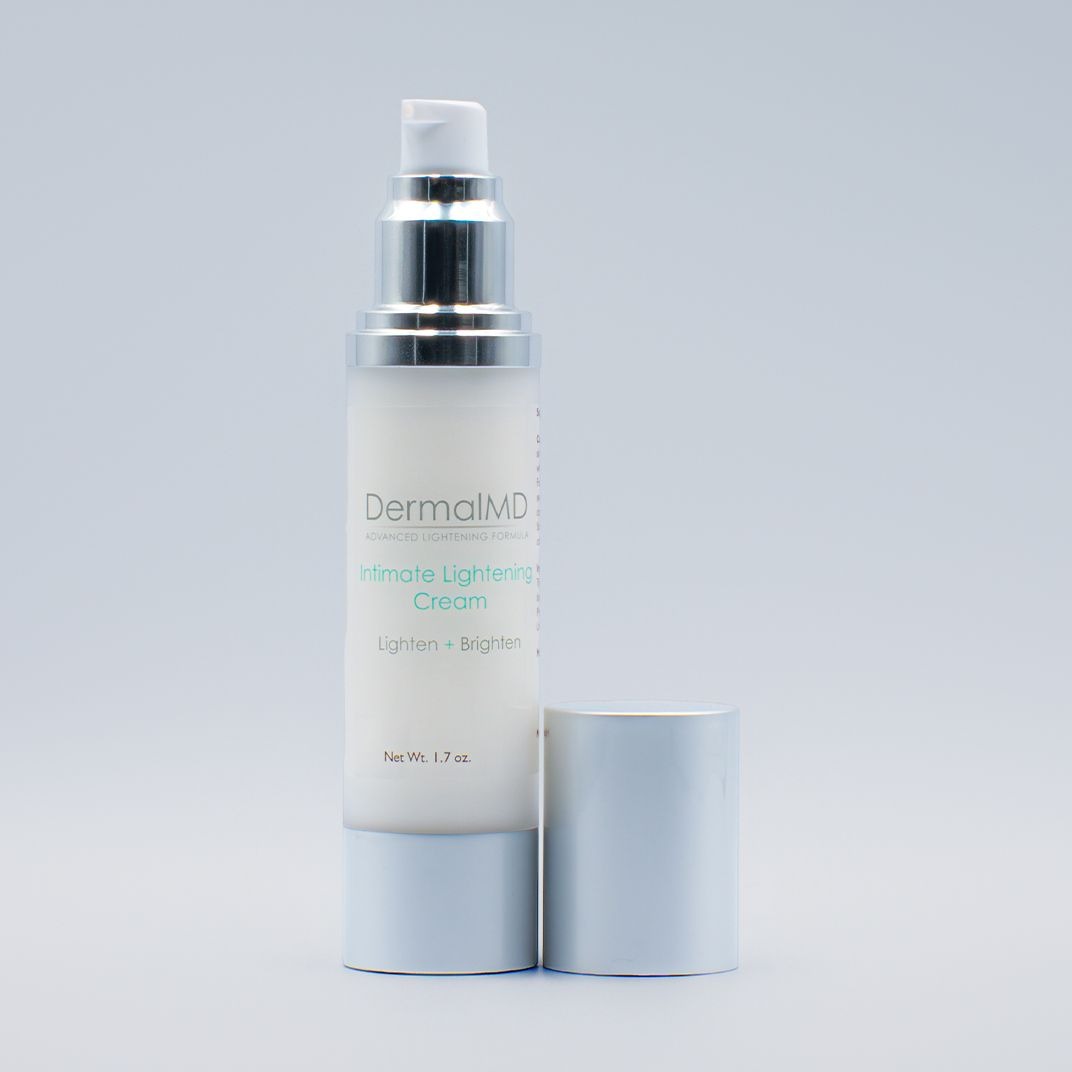
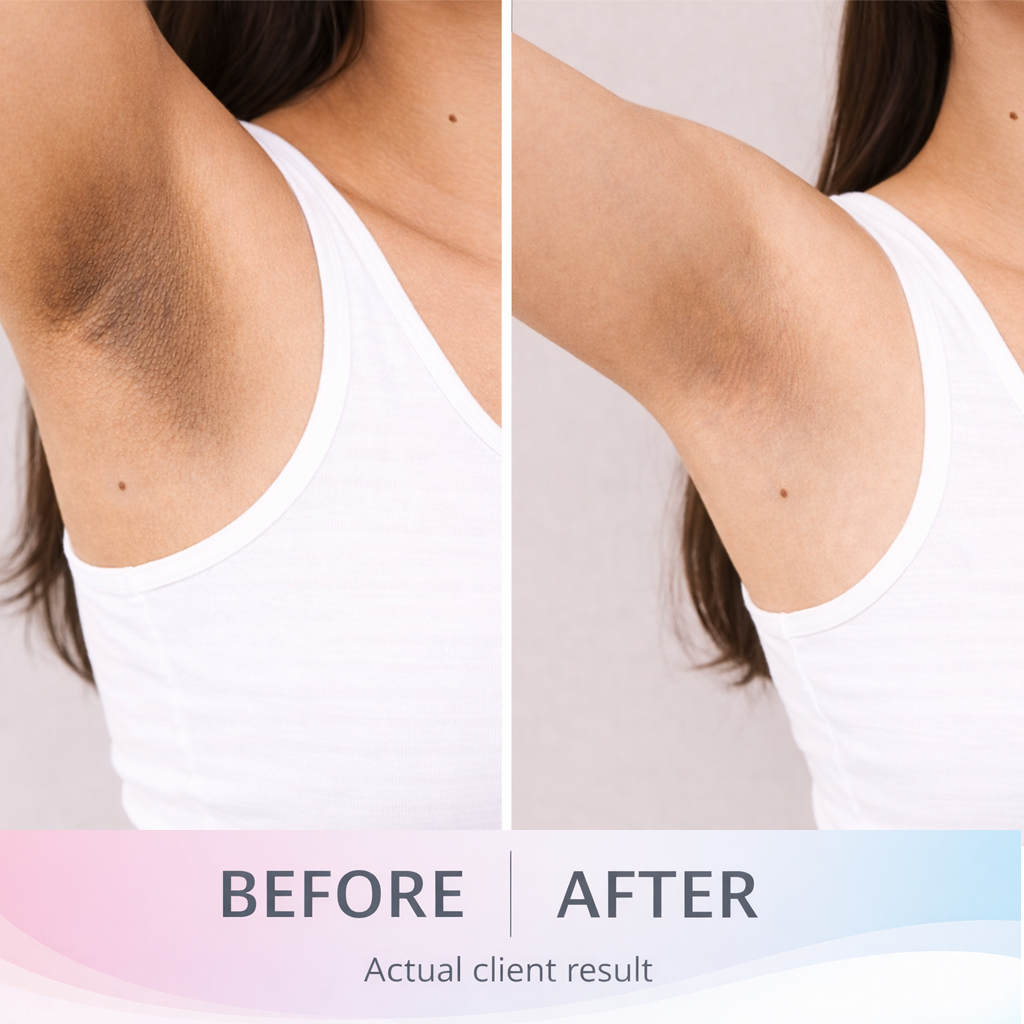
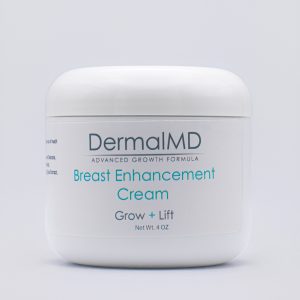
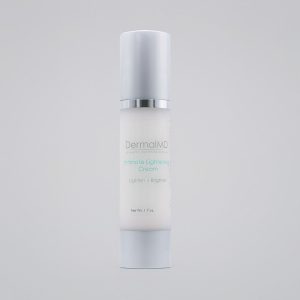
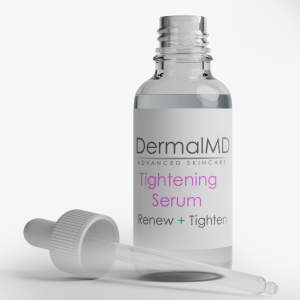
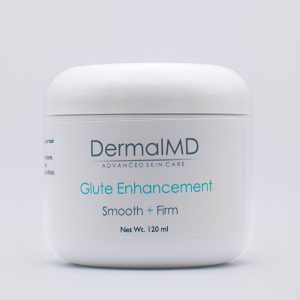
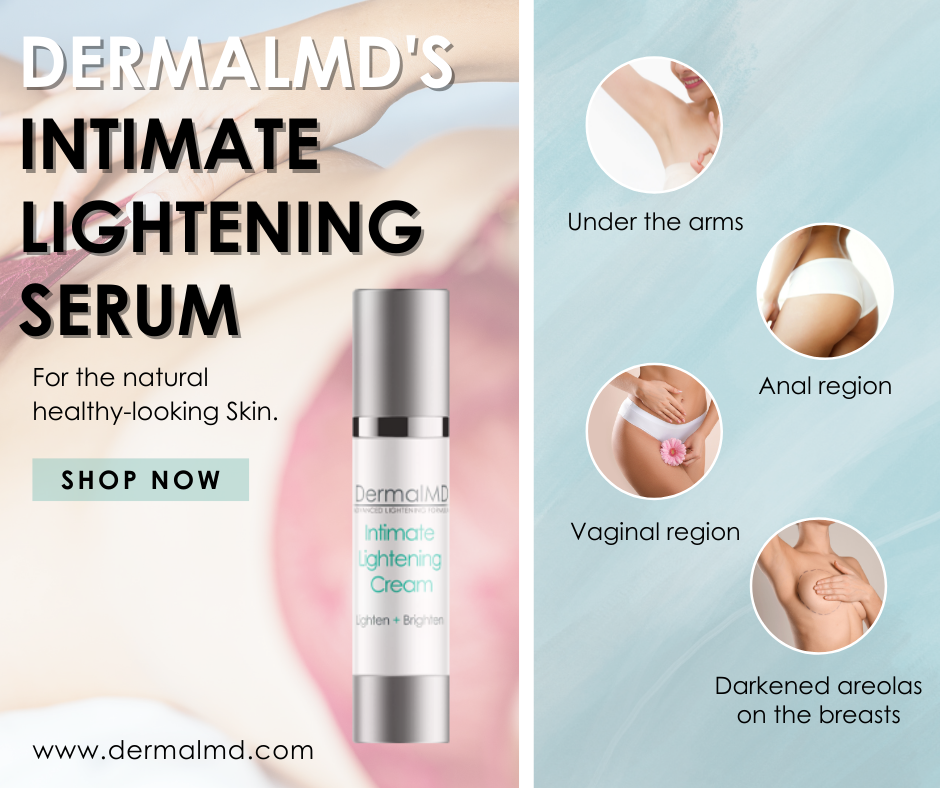
 Are you struggling to find lightening cream for your intimate areas? Find most lightening bleach creams too harsh or ineffective on intimation regions of your skin? DermalMD Intimate Lightening Serum is specially curated to make the skin in the intimate areas lighter. While most other whitening and lightening creams in the market are formulated for generic use and facial skin, DermalMD Intimate Lightening Serum has been scientifically validated to work best on the following areas:
✔ Under Arms
✔ Anal Region
✔ Vaginal Region & Bikini Line
✔ Darkened Areolas on The Breasts
At DermalMD, your health and wellness are our collective priorities. To that end, DermalMD Intimate Lightening Serum has been formulated to be gentle on the sensitive intimate areas. Instead of using harsh exfoliants which that can irritate, dry and even abrade the skin, DermalMD Intimate Lightening Serum leverages natural biochemicals which deconstruct melanin and inhibit its production. Melanin is a natural pigment produced by our skin cells which imparts darkening and hyperpigmentation onto the skin. Melanin is also responsible for freckles and aging spots which can leave unsightly marks on the intimate areas.
DermalMD Intimate Lightening Serum will:
✔ Reduce the hyperpigmentation caused by melanin on the intimate areas
✔ Nourish the underlying dermis in order to confer a youthful appearance
✔ Rejuvenate the fibroblasts in the epidermis to stimulate collagen production
✔ Even the skin tone in the intimate areas by inhibiting the production of melanin
✔ Lighten the skin that has been darkened by an overproduction of melanin and sun exposure
Not all intimate area darkening is caused by sunlight exposure. In fact, women with Fitzpatrick type III-IV skin are generally predisposed to darkening of the breast areolas, vulva and anal skin. Women who have breastfed or have had inflammatory conditions affecting these areas can also have post-inflammatory hyperpigmentation. The resultant darkening can cause an asymmetry in appearance and result in a stark contrast in skin tone. Other triggers such as rough fabrics, cold weather, the menstrual cycle, stress, personal soaps and antiperspirants, menstrual pads, douching products, tampons and feminine wipes can also cause or worsen hyperpigmentation in the intimate areas. Even personal habits and behavior such as grooming methods (e.g. electric razor, waxing, laser therapy and depilatory creams) can affect the degree of hyperpigmentation in the intimate areas.
With these factors in mind, women are strongly encouraged to use a serum that is specifically dedicated to reversing the hyperpigmentation of their intimate areas. DermalMD Intimate Lightening Serum consists of a synergistic blend of ingredients that are appropriate for the sensitive and under-exposed skin of the intimate regions.
Do Intimate Lightening Serums Work?
Do intimate lightening treatments work? The answer is that it depends on the product. Just like any other skin care treatment, there are some creams and serums that can provide desired results, while others may not be as effective. It is important to read reviews and research various products before making a purchase. Additionally, proper application of the product and consistency with use is essential in order to achieve the desired results.
It is also important to note that intimate lightening serum does not, in any way, provide permanent color changes or bleaching of the skin. In other words, one will need to continue using these products over time to maintain any achieved results. Additionally, always follow product instructions carefully, as misuse may result in adverse effects.
Overall, does intimate lightning serum work? It can be a useful tool to achieve desired results when used correctly and consistently. However, it is important to do your research and read reviews before investing in any particular product or system. Additionally, always consult with a dermatologist. DermalMD is dermatologist approved, and the safest and most effective option out there.
Creams Vs Serums
DermalMD contains both a serum and a cream combined, compounding the efficacy of the product; making it much more effective. Creams and serums have become a staple in most skincare routines due to their effectiveness at helping to keep skin looking healthy and youthful. But which one is right for you? Understanding the differences between creams and serums is essential to make an informed decision about your skincare routine.
Creams are thicker, heavier products that are more hydrating and nourishing. They’re great for people with dry or sensitive skin who need extra moisture. Creams typically contain a mix of oils, emollients, and occlusives, which help to seal in moisture and protect the skin from environmental damage.
On the other hand, serums are a lighter, more concentrated form of a skincare product. Thats why we combine both a serum and a cream, to maximize the effectiveness. They’re typically made with smaller molecules that can easily penetrate deep into the skin to deliver powerful active ingredients like antioxidants and peptides. Serums target specific concerns such as wrinkles, dark spots, or uneven texture, so they’re an excellent choice for those looking to address these issues.
When choosing between creams and serums, it’s essential to consider your own skin type and needs. If you have dry or sensitive skin, a cream may be the best option, while those with more specific skincare concerns should opt for a serum. Ultimately, the best skincare routine combines creams and serums for maximum results. So if you want to keep your skin healthy and youthful, it’s worth exploring the benefits of both creams and serums.
For more information and guidance on choosing between creams and serums, speak with a qualified professional or skincare expert. They can provide personalized advice tailored to your skin type and needs so that you can make the best decision for your routine. The right combination of creams and serums can help.